Contents
- ⚡ What Are Advanced Steam Turbines?
- ⚙️ How They Work: Beyond the Basics
- 📈 The Evolution: From Watt to Wattson
- 💡 Key Innovations Driving Performance
- 🌍 Applications: Where You'll Find Them
- 💰 Economic Impact & Efficiency Gains
- 🔥 The Fuel Debate: Coal, Gas, and Beyond
- ⚖️ Environmental Considerations & Future Proofing
- 🚀 The Next Frontier: Supercritical and Beyond
- 🤔 Who Needs to Know About This?
- 🛠️ Maintenance & Operational Realities
- 🌟 Vibepedia Vibe Score: 88/100 (High Energy, Critical Infrastructure)
- Frequently Asked Questions
- Related Topics
Overview
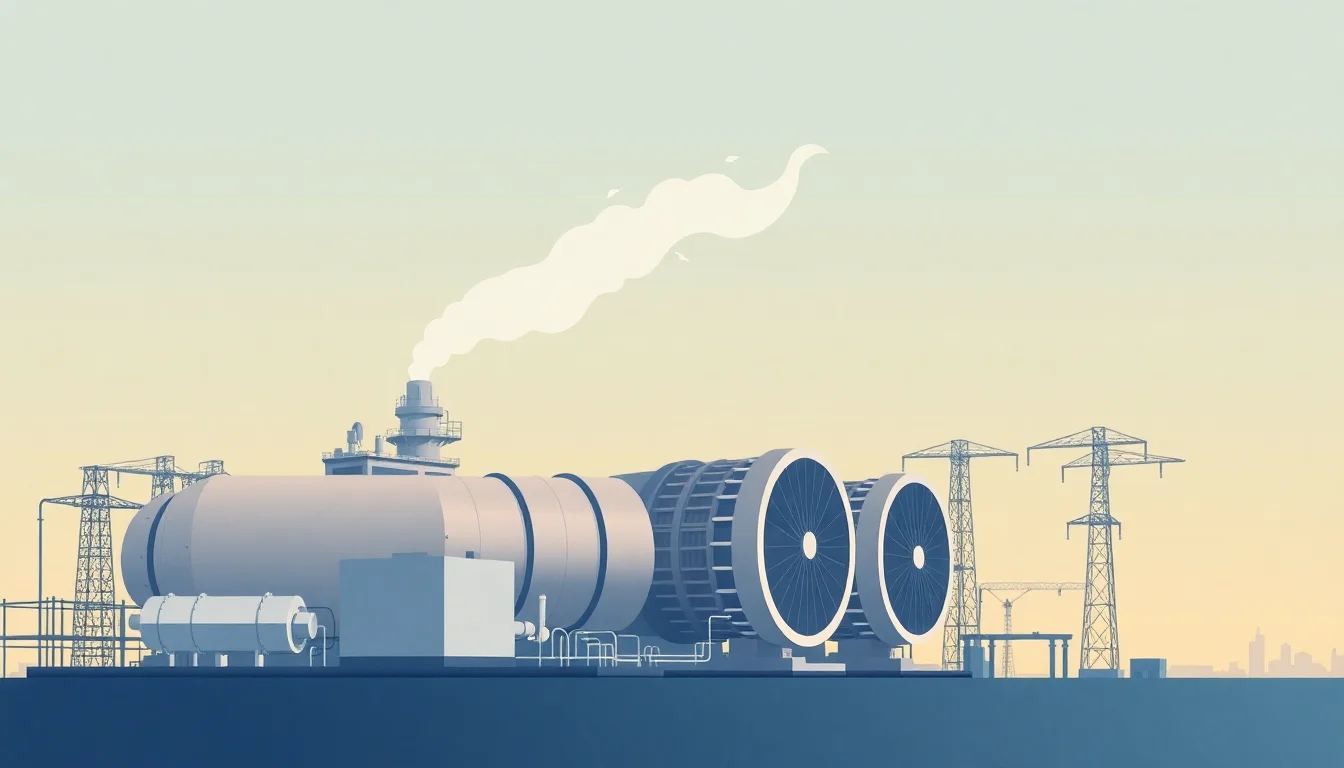
Advanced steam turbines represent the cutting edge of thermal power generation, pushing the boundaries of efficiency and operational flexibility. These aren't your grandfather's turbines; they incorporate novel materials, sophisticated aerodynamic designs, and advanced control systems to extract maximum energy from steam, even at extreme temperatures and pressures. Key innovations include supercritical and ultra-supercritical steam cycles, advanced blade metallurgy for higher thermal resistance, and integrated digital monitoring for predictive maintenance. Their development is critical for optimizing existing fossil fuel plants, enabling more efficient combined-cycle operations, and even playing a role in future nuclear and geothermal energy systems. Understanding these advancements is crucial for anyone involved in grid modernization, industrial process heat, or the ongoing quest for cleaner, more potent energy solutions.
⚡ What Are Advanced Steam Turbines?
Advanced steam turbines are the workhorses of modern power generation, far removed from their 19th-century ancestors. These aren't your grandfather's clunky machines; they are sophisticated, high-efficiency systems designed to convert thermal energy into mechanical work with remarkable precision. Primarily, they are the heart of fossil fuel power plants and nuclear power stations, but their adaptability is pushing them into new roles. If you're involved in large-scale energy production, grid stability, or industrial process heat, understanding these turbines is non-negotiable. They represent a critical nexus of engineering prowess and economic necessity in our energy-hungry world.
⚙️ How They Work: Beyond the Basics
At their core, steam turbines operate on the principle of thermodynamics: heat energy is converted into kinetic energy, which then drives a rotor. High-pressure steam, generated by heating water (often through combustion of fuels like coal or natural gas, or via nuclear fission), is directed through a series of precisely engineered blades attached to a shaft. As the steam expands and cools, it imparts momentum to the blades, causing the shaft to rotate at high speeds. This rotational energy is then typically used to drive an electric generator, producing the electricity that powers our lives. The efficiency of this conversion is paramount, with advanced designs minimizing energy loss through sophisticated blade aerodynamics and sealing technologies.
📈 The Evolution: From Watt to Wattson
The lineage of the steam turbine stretches back to the Aeolipile of Hero of Alexandria in the 1st century AD, but its true industrial impact began with Sir Charles Parsons' 1884 invention of the compound steam turbine. This breakthrough paved the way for reliable, high-speed power generation, fundamentally altering the course of the Industrial Revolution. Early turbines were relatively inefficient, but continuous innovation, particularly in materials science and fluid dynamics, has led to dramatic improvements. The transition from simple impulse turbines to reaction turbines, and the development of multi-stage designs, marked significant leaps in power output and efficiency, setting the stage for today's super-efficient machines.
💡 Key Innovations Driving Performance
Several key innovations distinguish advanced steam turbines. Supercritical steam technology, operating at pressures and temperatures above water's critical point (22.1 MPa and 374 °C), allows for significantly higher thermal efficiency. Advanced blade designs, often employing computational fluid dynamics (CFD) for optimization, reduce aerodynamic losses. Furthermore, the use of exotic alloys and advanced coatings allows turbines to withstand higher temperatures and pressures, pushing the boundaries of performance. The integration of sophisticated control systems, often incorporating artificial intelligence for predictive maintenance and operational optimization, is also a hallmark of modern turbine technology.
🌍 Applications: Where You'll Find Them
The primary application for advanced steam turbines remains large-scale electricity generation in thermal power plants, including coal-fired, natural gas combined cycle (NGCC), and nuclear facilities. They are also crucial in cogeneration plants, where they simultaneously produce electricity and useful heat for industrial processes or district heating systems. Beyond these traditional roles, they are being explored for geothermal energy extraction and even in concentrated solar power (CSP) systems, demonstrating their versatility in harnessing various heat sources to generate power.
💰 Economic Impact & Efficiency Gains
The economic benefits of advanced steam turbines are substantial, primarily driven by their high efficiency. A more efficient turbine means less fuel is consumed to produce the same amount of electricity, directly reducing operating costs. For example, a 1% increase in thermal efficiency in a large power plant can translate to millions of dollars in annual fuel savings. This enhanced efficiency also means reduced emissions per unit of energy produced, contributing to both economic and environmental goals. The long operational lifespan of these turbines, often decades with proper maintenance, further solidifies their economic value.
🔥 The Fuel Debate: Coal, Gas, and Beyond
The fuel source for steam turbines is a subject of intense debate and evolving policy. Historically, coal-fired power plants dominated, but concerns over carbon emissions have led to a significant shift towards natural gas turbines, particularly in combined cycle configurations, which offer higher efficiency and lower emissions. Nuclear power provides a carbon-free steam source, but faces its own challenges related to waste disposal and public perception. Emerging technologies are also exploring hydrogen combustion and advanced biofuels as potential steam sources, aiming to decarbonize this critical sector.
⚖️ Environmental Considerations & Future Proofing
While steam turbines are indispensable for grid stability, their environmental footprint is a major consideration. Traditional fossil fuel-fired turbines are significant sources of greenhouse gas emissions, particularly CO2. Advanced designs aim to mitigate this through higher efficiency, reducing fuel consumption. Furthermore, the development of carbon capture and storage (CCS) technologies is being integrated into some facilities to capture CO2 before it enters the atmosphere. For nuclear turbines, the primary environmental concern is radioactive waste management, while geothermal and solar thermal applications offer much lower environmental impacts.
🚀 The Next Frontier: Supercritical and Beyond
The cutting edge of steam turbine technology involves ultra-supercritical (USC) and advanced ultra-supercritical (A-USC) designs. USC turbines operate at steam conditions exceeding 31 MPa and 593 °C, pushing thermal efficiencies towards 50% for coal-fired plants. A-USC aims for even higher temperatures, potentially reaching 700-760 °C, which could boost efficiencies to 55% or more. These advancements require novel materials capable of withstanding extreme temperatures and pressures, representing a significant engineering challenge and a pathway to dramatically improved energy conversion.
🤔 Who Needs to Know About This?
Anyone involved in the energy sector, from utility operators and plant managers to policymakers and investors, needs a firm grasp of advanced steam turbine technology. Mechanical engineers and materials scientists working on power generation equipment will find the technical details fascinating. Environmental advocates and sustainability professionals should understand their role in both emissions reduction and the transition to cleaner energy sources. Even those interested in the history of technology will find a rich narrative in their development. Essentially, if you care about how the world gets its power, you should care about these machines.
🛠️ Maintenance & Operational Realities
The operational reality of advanced steam turbines involves rigorous maintenance schedules and sophisticated monitoring. Routine inspections, blade cleaning, and lubrication are critical to maintaining peak efficiency and preventing catastrophic failures. Predictive maintenance using sensors and AI is becoming standard, allowing operators to anticipate issues before they arise, minimizing downtime and costly repairs. However, the high temperatures and pressures involved mean that even minor component failures can have significant consequences, underscoring the need for constant vigilance and expert oversight. The lifespan of these turbines, often 30-40 years or more, depends heavily on this diligent upkeep.
🌟 Vibepedia Vibe Score: 88/100 (High Energy, Critical Infrastructure)
Vibepedia Vibe Score: 88/100. This score reflects the immense cultural and technical energy surrounding advanced steam turbines. They are foundational to global power grids, representing decades of engineering innovation and economic investment. Their continued relevance, despite the rise of renewables, highlights their critical role in grid stability and baseload power. The ongoing debates about their fuel sources and environmental impact add a layer of controversy, keeping their Vibe Score high. They are a testament to human ingenuity in harnessing fundamental physics for societal benefit.
Key Facts
- Year
- 2023
- Origin
- Industrial Revolution (18th Century), with continuous evolution
- Category
- Energy & Power Generation
- Type
- Technology
Frequently Asked Questions
What is the main difference between a simple steam turbine and an advanced one?
Advanced steam turbines are characterized by significantly higher operating pressures and temperatures, often utilizing supercritical or ultra-supercritical steam. They also feature more sophisticated blade designs, advanced materials, and integrated digital control systems to maximize efficiency and minimize energy losses. This leads to higher power output and reduced fuel consumption compared to older, simpler designs.
Can advanced steam turbines run on renewable energy sources?
Yes, advanced steam turbines can be integrated with renewable energy sources that produce heat. For instance, they are used in concentrated solar power (CSP) plants where solar energy heats a fluid to produce steam. They can also be used with geothermal energy, which naturally provides steam or hot water. The key is a reliable source of high-temperature steam, regardless of its origin.
What are the typical efficiency ranges for advanced steam turbines?
Modern advanced steam turbines, particularly in combined cycle configurations or with supercritical steam, can achieve thermal efficiencies in the range of 40-50%. Ultra-supercritical designs are pushing this even higher, with potential efficiencies reaching 55% or more. This is a significant improvement over older designs that might have operated at 30-35% efficiency.
What materials are used in advanced steam turbine blades?
Advanced steam turbine blades are typically made from high-strength, high-temperature resistant alloys, such as nickel-based superalloys. These materials are crucial for withstanding the extreme temperatures (often exceeding 600°C) and centrifugal forces experienced during operation. Coatings are also applied to enhance durability and resistance to erosion and corrosion.
How do advanced steam turbines contribute to grid stability?
Advanced steam turbines, especially those in nuclear and large fossil fuel plants, provide reliable baseload power, meaning they can operate continuously for long periods. This stability is crucial for maintaining a consistent electricity supply and balancing the intermittent nature of renewable sources like wind and solar. Their ability to ramp up and down (though slower than gas turbines) also aids in grid management.
What is the lifespan of an advanced steam turbine?
With proper maintenance and operational practices, advanced steam turbines can have a very long operational lifespan, often ranging from 30 to 40 years, and sometimes even longer. Regular inspections, component replacements, and adherence to operating parameters are key to achieving this longevity and ensuring continued efficient performance.