
Vibepedia

Bunny Wailer | Vibepedia

roots-reggae ska rocksteady jamaica rastafari
Bunny Wailer | Vibepedia

Bunny Wailer, born Neville Livingston, was a foundational pillar of reggae music, not just as a member of the legendary [[the-wailers|The Wailers]] alongside…

Contents

  1. Early Life & Musical Beginnings
  2. Solo Career & Critical Acclaim
  3. Legacy & Spiritual Advocacy
  4. Cultural Significance
  5. Frequently Asked Questions
  6. Related Topics

Overview

Bunny Wailer, born Neville Livingston, was a foundational pillar of reggae music, not just as a member of the legendary [[the-wailers|The Wailers]] alongside [[bob-marley|Bob Marley]] and [[peter-tosh|Peter Tosh]], but as a solo artist whose work championed Rastafari faith and Pan-Africanism. His distinctive vocal harmonies and deeply spiritual lyrics, often infused with a profound sense of justice and cultural pride, cemented his status as one of reggae's most revered elders. Wailer's commitment to his faith and his unwavering artistic integrity defined a career that spanned over six decades, leaving an indelible mark on global music.

From the early ska days with The Wailers through their pivotal transition to [[roots-reggae|roots reggae]], Wailer's voice was a crucial element, providing a grounding counterpoint to Marley's lead and Tosh's sharp pronouncements. Post-Wailers, his solo career blossomed with albums like 'Blackheart Man' (1976) and 'Crucial!' (1993), showcasing a mature artistry that explored themes of spirituality, social commentary, and the African diaspora. He was a dedicated advocate for the Rastafarian movement, often using his platform to educate and inspire, and was recognized with multiple [[grammy-awards|Grammy Awards]] for his contributions to reggae music.

Early Life & Musical Beginnings

Born Neville Livingston in Kingston, Jamaica, Bunny Wailer's early life was steeped in the cultural milieu that would give birth to the island's iconic music genres. His formative years were shaped by the burgeoning ska scene and the growing influence of the [[rastafari-movement|Rastafari movement]]. It was in this environment that he met [[bob-marley|Bob Marley]] and [[peter-tosh|Peter Tosh]], forming a bond that would lead to the creation of [[the-wailers|The Wailers]] in 1963. Alongside Marley and Tosh, Wailer's vocal contributions were essential to the group's early ska and rocksteady hits, laying the groundwork for their later evolution into global reggae ambassadors.

Solo Career & Critical Acclaim

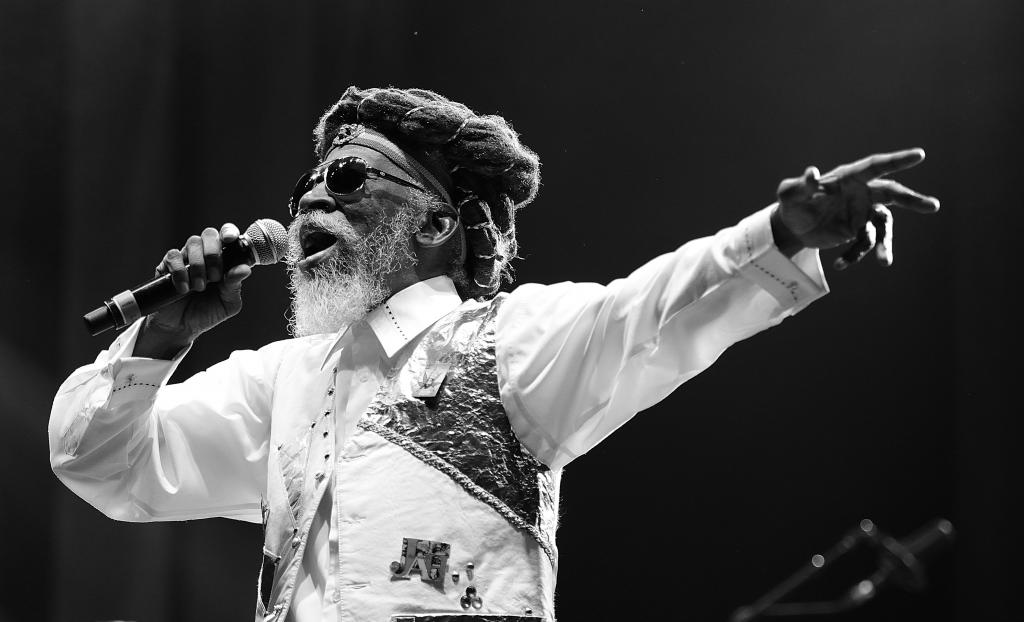
As The Wailers transitioned into the roots reggae era, Bunny Wailer's role became even more pronounced. His distinctive vocal style and lyrical focus on [[rastafari-movement|Rastafari]] principles, social justice, and African heritage distinguished his output. After [[bob-marley|Bob Marley]]'s international solo success and [[peter-tosh|Peter Tosh]]'s departure, Wailer embarked on a prolific solo career. His debut solo album, 'Blackheart Man' (1976), is considered a masterpiece of the genre, featuring classics like 'Rastaman Chant' and 'The Slouch'. Subsequent albums, including 'Protest' (1977), 'Struggle' (1978), and 'Roots Radics Rockers' (1985), continued to explore these themes with unwavering conviction. He was a regular performer at major festivals and garnered significant critical acclaim, including three [[grammy-awards|Grammy Awards]] for Best Reggae Album.

Legacy & Spiritual Advocacy

Bunny Wailer's legacy extends far beyond his discography. He was a staunch defender of [[rastafari-movement|Rastafari]] culture, often acting as a spiritual guide and educator. His commitment to preserving the integrity of reggae music and its message of peace, love, and unity made him a respected elder statesman. His influence can be heard in countless reggae artists who followed, inspired by his lyrical depth, vocal prowess, and unwavering dedication to his beliefs. He remained a vital cultural force until his passing in March 2021, leaving behind a body of work that continues to resonate with spiritual and social significance.

Cultural Significance

The cultural impact of Bunny Wailer is profound. As one of the original architects of reggae, his influence permeated the genre's development from its nascent stages to its global recognition. His solo work, in particular, underscored the spiritual and political dimensions of reggae, solidifying its role as a voice for the oppressed and a champion of African identity. Wailer's consistent advocacy for [[rastafari-movement|Rastafari]] principles, including his embrace of ganja as a sacrament and his commitment to vegetarianism, made him a living embodiment of the movement's ideals. His passing marked the end of an era, but his music and message endure as a testament to the power of faith and cultural resilience.

Key Facts

Year
1947-2021
Origin
Kingston, Jamaica
Category
music
Type
artist

Frequently Asked Questions

What was Bunny Wailer's role in The Wailers?

Bunny Wailer was a founding member of The Wailers, and he played a crucial role in shaping the sound of the band. He was a vocalist, songwriter, and musician, and his unique style and talents helped to establish The Wailers as one of the most influential Reggae bands of all time. As a member of The Wailers, Bunny Wailer performed with [[bob-marley|Bob Marley]] and [[peter-tosh|Peter Tosh]], and the trio's music was a fusion of [[ska|Ska]], [[rocksteady|Rocksteady]], and [[reggae|Reggae]].

What was Bunny Wailer's solo career like?

Bunny Wailer's solo career was highly successful, and he released several critically acclaimed albums. His music was a unique blend of [[reggae|Reggae]], [[roots-reggae|Roots Reggae]], and [[dancehall|Dancehall]], and he was known for his powerful live performances. As a solo artist, Bunny Wailer worked with several other musicians, including [[sly-and-robby|Sly and Robbie]] and [[toots-and-the-maytals|Toots and the Maytals]]. His albums, such as [[time-will-tell|Time Will Tell]] and [[communication|Communication]], were widely praised for their originality and creativity.

What were some of Bunny Wailer's most notable works?

Some of Bunny Wailer's most notable works include [[blackheart-man|Blackheart Man]], [[protest|Protest]], and [[sings-the-wailers|Sings the Wailers]]. These albums were critically acclaimed and helped to establish Bunny Wailer as a major figure in Reggae music. His music was also featured in several films and documentaries, including [[the-harder-they-come|The Harder They Come]] and [[word-sound-and-power|Word, Sound and Power]]. As a solo artist, Bunny Wailer released several albums, including [[time-will-tell|Time Will Tell]] and [[communication|Communication]].

What was Bunny Wailer's legacy?

Bunny Wailer's legacy is still felt today, and he is widely regarded as one of the most influential Reggae artists of all time. His music continues to inspire new generations of musicians and fans, and his contributions to Reggae music are immeasurable. As a member of [[the-wailers|The Wailers]] and as a solo artist, Bunny Wailer played a crucial role in shaping the sound of Jamaican music. His unique vocal style and songwriting skills made him a standout artist, and his music remains a powerful force in the world of Reggae.

How did Bunny Wailer's music influence other artists?

Bunny Wailer's music had a significant influence on other artists, particularly in the Reggae genre. His unique vocal style and songwriting skills inspired many musicians, including [[peter-tosh|Peter Tosh]] and [[toots-and-the-maytals|Toots and the Maytals]]. His music also influenced artists outside of the Reggae genre, such as [[eric-clapton|Eric Clapton]] and [[stevie-wonder|Stevie Wonder]]. As a solo artist, Bunny Wailer released several critically acclaimed albums, including [[time-will-tell|Time Will Tell]] and [[communication|Communication]]. His music continues to inspire new generations of musicians and fans.

What was Bunny Wailer's relationship like with Bob Marley and Peter Tosh?

Bunny Wailer's relationship with [[bob-marley|Bob Marley]] and [[peter-tosh|Peter Tosh]] was close and complex. The three musicians formed The Wailers together, and their music was a fusion of [[ska|Ska]], [[rocksteady|Rocksteady]], and [[reggae|Reggae]]. They were known for their powerful live performances, and their music was widely praised for its originality and creativity. As a solo artist, Bunny Wailer released several critically acclaimed albums, including [[time-will-tell|Time Will Tell]] and [[communication|Communication]]. His music was also influenced by [[bob-marley|Bob Marley]] and [[peter-tosh|Peter Tosh]], with whom he had a deep respect and admiration.

How did Bunny Wailer's music reflect his cultural heritage?

Bunny Wailer's music reflected his cultural heritage in many ways. As a Jamaican musician, he was deeply rooted in the traditions of [[reggae|Reggae]] and [[roots-reggae|Roots Reggae]]. His music often dealt with themes of [[social-justice|Social justice]] and [[black-liberation|Black liberation]], and he was known for his powerful and poignant lyrics. As a solo artist, Bunny Wailer released several critically acclaimed albums, including [[time-will-tell|Time Will Tell]] and [[communication|Communication]]. His music continues to inspire new generations of musicians and fans, and his legacy remains a powerful force in the world of Reggae.