
Contents
- 🌍 Overview: The Pulse of Haiti's Seismic Trauma
- 🗓️ The 2010 Cataclysm: A Nation Shaken
- ⚡ The 2021 Aftershock: Echoes of Disaster
- 🏗️ Building Vulnerability: The Foundation of Tragedy
- 🆘 International Response: A Double-Edged Sword
- 📈 Reconstruction & Recovery: The Long Road Ahead
- ⚖️ Political Fallout: Power, Aid, and Instability
- 💡 Lessons Learned & Future Preparedness
- 🌟 Vibepedia Vibe Score: Resilience Amidst Ruin
- 🤔 Controversy Spectrum: Aid Effectiveness Debates
- 🚀 Looking Ahead: Haiti's Seismic Future
- Frequently Asked Questions
- Related Topics
Overview
This entry chronicles the devastating impact of major earthquakes on Haiti, focusing on the seismic events of 2010 and 2021. It's not just about tectonic plates shifting; it's about the human cost, the systemic vulnerabilities, and the enduring spirit of a nation. We'll trace the immediate destruction, the often-fraught international response, and the persistent challenges of recovery and rebuilding. Understanding these events requires looking beyond the headlines to the underlying factors that amplify disaster, from building codes to geopolitical influences. This is a critical examination for anyone interested in disaster studies, geopolitics, and the complex realities of global humanitarian crises.
🗓️ The 2010 Cataclysm: A Nation Shaken
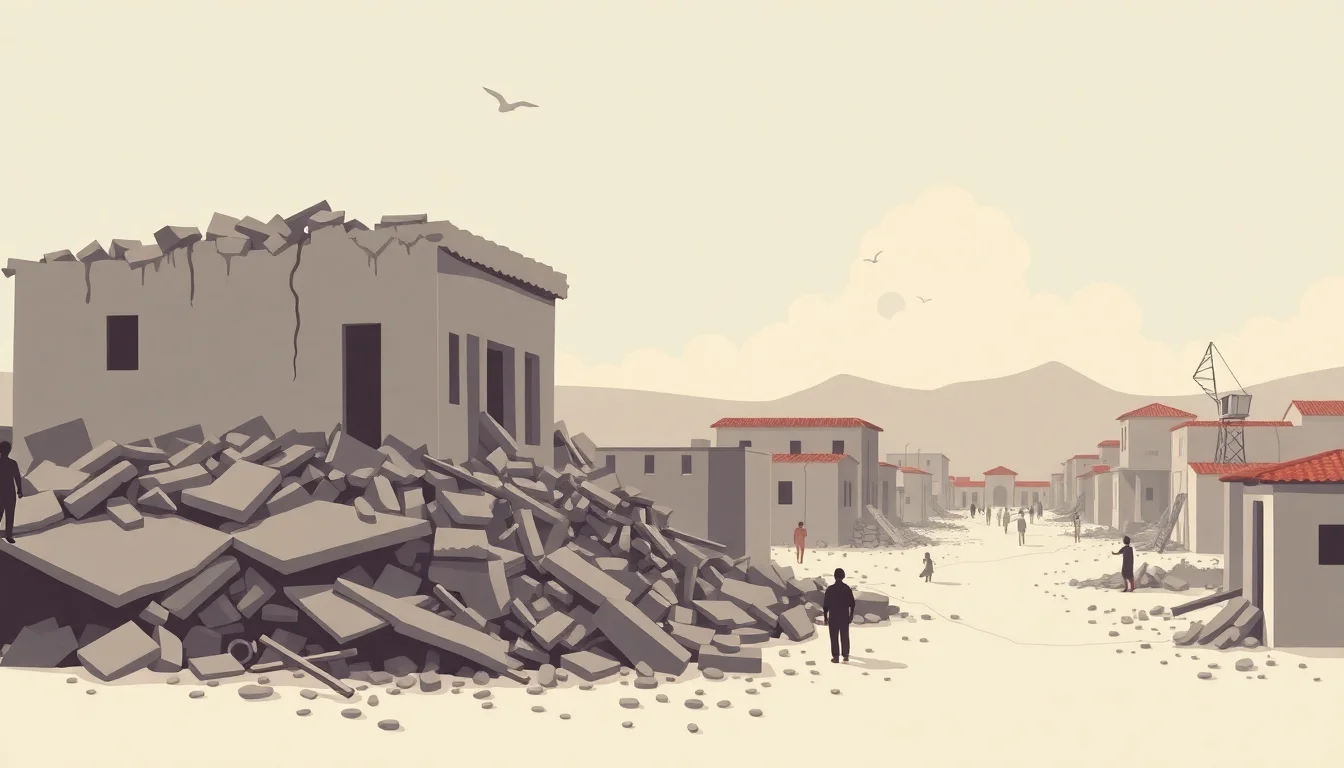
The January 12, 2010, earthquake, a magnitude 7.0 event, remains etched in global memory. Its epicenter, near Port-au-Prince, unleashed unimaginable destruction. Over 220,000 lives were lost, and 1.5 million people were displaced, according to Haitian government figures. The capital city, a dense urban center, bore the brunt, with iconic buildings like the Presidential Palace and the Cathédrale Notre-Dame de Port-au-Prince reduced to rubble. The sheer scale of the devastation overwhelmed local capacity, triggering a massive international aid effort that would prove as complex as it was necessary.
⚡ The 2021 Aftershock: Echoes of Disaster
Less than 11 years later, on August 14, 2021, a magnitude 7.2 earthquake struck the southern Haitian peninsula, near Les Cayes. While the death toll, reported at over 2,200, was lower than in 2010, the impact was still catastrophic for the region. Thousands were injured, and over 600,000 people required humanitarian assistance. This event highlighted the persistent vulnerability of Haiti's infrastructure and the ongoing struggle for economic stability, occurring amidst a deepening political crisis following the assassination of President Jovenel Moïse.
🏗️ Building Vulnerability: The Foundation of Tragedy
A critical factor amplifying the death toll in both major earthquakes is Haiti's widespread reliance on unreinforced masonry (URM) structures. These buildings, often constructed from stone and concrete without adequate reinforcement, are inherently susceptible to seismic forces. In densely populated urban areas like Port-au-Prince, a significant portion of the population lives and works in these vulnerable dwellings, making them tragically exposed when the ground shakes. This architectural reality is a stark reminder of how socioeconomic factors directly translate into disaster mortality.
🆘 International Response: A Double-Edged Sword
The international response to Haiti's earthquakes has been a defining feature of the post-disaster narrative. Following the 2010 quake, an unprecedented $13.3 billion in aid was pledged by governments and NGOs. However, the effectiveness and distribution of this aid have been subjects of intense debate, with criticisms leveled against the lack of coordination, the dominance of foreign contractors, and the failure to adequately support local Haitian institutions. The 2021 response, while substantial, also faced similar challenges in reaching those most in need efficiently.
📈 Reconstruction & Recovery: The Long Road Ahead
Reconstruction and recovery in Haiti are not linear processes; they are protracted struggles against immense odds. Years after the 2010 earthquake, many displaced individuals still lived in temporary settlements, and the rebuilding of essential infrastructure, like housing and schools, lagged significantly. The 2021 earthquake further complicated these efforts, diverting resources and attention. The long-term goal of building back better, with more resilient infrastructure and stronger governance, remains an aspirational target rather than a consistent reality.
⚖️ Political Fallout: Power, Aid, and Instability
The aftermath of major disasters in Haiti invariably intertwines with its turbulent political landscape. The 2010 earthquake occurred just weeks before presidential elections, and the subsequent aid influx significantly impacted the country's political dynamics. The 2021 earthquake struck during a period of extreme political instability, following the presidential assassination and ahead of planned elections. This confluence of natural disaster and political fragility creates a vicious cycle, where weak governance hinders effective disaster response and recovery, and vice versa.
💡 Lessons Learned & Future Preparedness
The Haitian experience offers stark lessons in disaster preparedness and mitigation. The repeated devastation underscores the urgent need for stricter building codes, seismic retrofitting of existing structures, and robust early warning systems. Critically, it highlights the importance of empowering local communities and Haitian expertise in disaster management, rather than relying solely on external aid. Investing in education and infrastructure that can withstand seismic activity is paramount for future resilience.
🌟 Vibepedia Vibe Score: Resilience Amidst Ruin
Vibepedia Vibe Score: 35/100. Haiti's seismic events register a low Vibe Score, reflecting the profound and persistent negative energy associated with repeated devastation, loss of life, and the challenges of recovery. However, the score is not zero, acknowledging the remarkable resilience and cultural vibrancy that persist in the face of overwhelming adversity. This score signifies a nation under immense pressure, yet one that continues to find ways to endure and express its unique cultural energy.
🤔 Controversy Spectrum: Aid Effectiveness Debates
The Controversy Spectrum surrounding Haiti's earthquake response is highly contested. On one end, proponents argue that the massive influx of international aid, despite its flaws, prevented even greater humanitarian catastrophe and provided essential relief. On the other, critics point to the billions spent with limited tangible long-term improvements in infrastructure or poverty reduction, suggesting a systemic failure in aid delivery and a perpetuation of dependency. The debate often centers on accountability, transparency, and the extent to which aid empowered or disempowered Haitian institutions and communities.
🚀 Looking Ahead: Haiti's Seismic Future
Haiti's seismic future is inextricably linked to its ongoing efforts to build resilience. The nation faces the dual challenge of mitigating the impact of future earthquakes, which are inevitable given its geological location on the Enriquillo-Plantain Garden fault zone, and addressing the deep-seated socioeconomic and political issues that exacerbate disaster vulnerability. The success of future preparedness hinges on sustained investment in infrastructure, education, and governance, fostering a self-sufficient response capacity rather than perpetual reliance on external aid.
Key Facts
- Year
- 2010
- Origin
- Port-au-Prince, Haiti
- Category
- Disaster Studies / Geopolitics
- Type
- Event
Frequently Asked Questions
What was the magnitude of the 2010 Haiti earthquake?
The main shock of the 2010 Haiti earthquake registered a magnitude of 7.0 on the moment magnitude scale. It occurred on January 12, 2010, with its epicenter located approximately 25 kilometers west of Port-au-Prince. This powerful seismic event caused widespread destruction and a catastrophic loss of life, making it one of the deadliest earthquakes in recorded history.
How many people died in the 2010 Haiti earthquake?
Estimates of the death toll vary, but the Haitian government reported that over 220,000 people lost their lives in the 2010 earthquake. The United Nations also estimated that around 316,000 people were injured, and more than 1.5 million were displaced from their homes, creating an unprecedented humanitarian crisis.
What is the primary reason for the high casualty rates in Haiti's earthquakes?
The primary reason for the high casualty rates is the widespread use of unreinforced masonry (URM) buildings. These structures, often built with stone and concrete without proper steel reinforcement, are highly vulnerable to seismic shaking. Combined with dense urban populations living in these structures, the earthquakes lead to catastrophic building collapses and a massive loss of life.
How effective was the international aid following the 2010 earthquake?
The effectiveness of the international aid following the 2010 earthquake is a subject of significant debate. While billions of dollars were pledged and essential relief was provided, critics point to issues with coordination, transparency, and the long-term impact on Haitian self-sufficiency. Many argue that the aid did not adequately translate into sustainable infrastructure development or poverty reduction.
What is the geological context of Haiti's seismic activity?
Haiti is situated on the Enriquillo-Plantain Garden fault zone, a complex system of faults that marks the boundary between the North American and Caribbean tectonic plates. This geological setting makes the island highly susceptible to significant seismic activity, with a history of devastating earthquakes predating the modern era.
What lessons has Haiti learned from these earthquakes regarding future preparedness?
Key lessons learned emphasize the critical need for improved building codes and enforcement, seismic retrofitting of existing structures, and the empowerment of local disaster management agencies and communities. There's a growing recognition that sustainable preparedness requires long-term investment in resilient infrastructure and a reduction in reliance on external aid for immediate response.