
Contents
- 📞 Who Was Lars Magnus Ericsson?
- 💡 The Spark of Innovation: Early Life & Education
- ⚙️ Forging the Future: Ericsson's Early Ventures
- 🌐 The Birth of a Global Brand: LM Ericsson
- 📈 Key Innovations & Their Impact
- 🏆 Legacy & Enduring Influence
- 🤔 Debates & Controversies Surrounding His Work
- 🌟 Vibepedia Vibe Score & Analysis
- Frequently Asked Questions
- Related Topics
Overview
Lars Magnus Ericsson, born in 1846, was a pioneering Swedish inventor and entrepreneur whose name became synonymous with telecommunications. Starting from humble beginnings, he founded what would become Ericsson AB, a global powerhouse in mobile technology. His early work focused on improving telegraph equipment, but he quickly recognized the potential of the nascent telephone system. Ericsson's innovative designs, particularly his robust and reliable telephone sets, were instrumental in the rapid expansion of telephone networks across Sweden and beyond. He wasn't just an inventor; he was a shrewd businessman who understood the importance of quality and accessibility, laying the groundwork for a company that would shape global communication for over a century.
📞 Who Was Lars Magnus Ericsson?
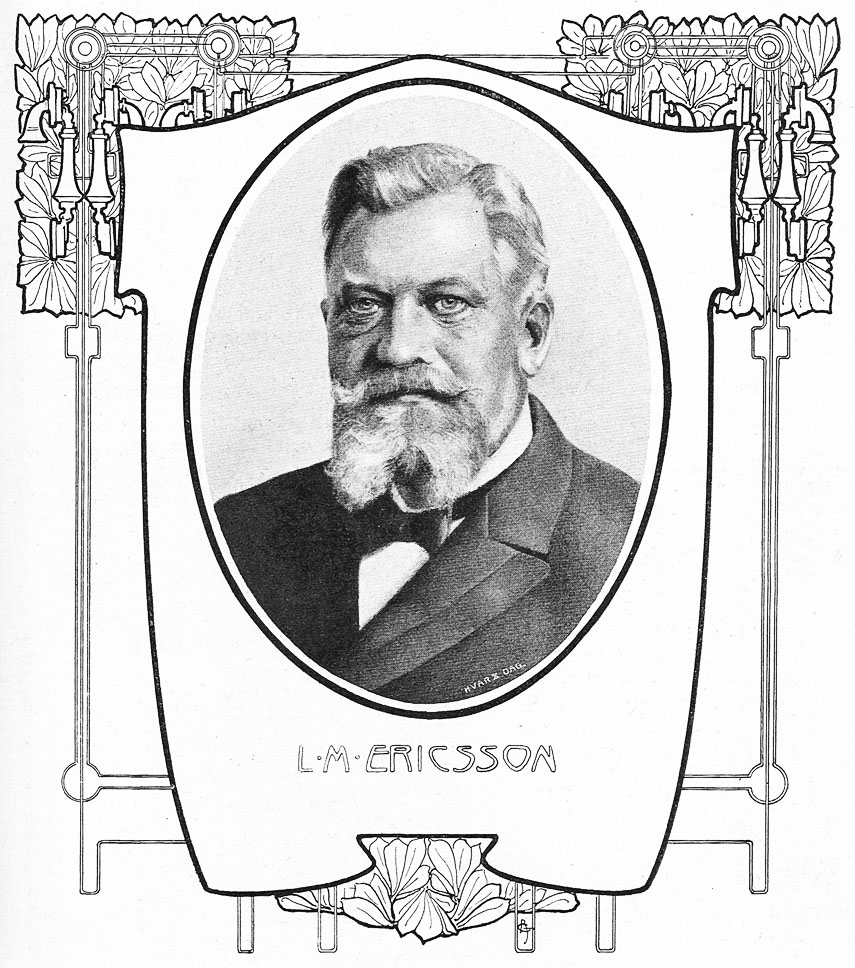
Lars Magnus Ericsson (1846-1926) was the Swedish inventor and entrepreneur who founded the company that would become a titan of telecommunications: Telefonaktiebolaget LM Ericsson. He wasn't just a businessman; he was a hands-on engineer who tinkered, experimented, and ultimately built the foundations for modern global communication networks. His story is one of relentless curiosity, practical ingenuity, and the foresight to see the potential of a nascent technology. Understanding Ericsson is crucial for grasping the early evolution of telephony and the subsequent development of the telecom industry.
💡 The Spark of Innovation: Early Life & Education
Born in Värmskog, Sweden, Ericsson's early life was marked by a fascination with mechanics. He apprenticed as a telegraph mechanic, a role that exposed him to the cutting-edge technology of his time. This practical experience, coupled with a keen intellect, laid the groundwork for his future endeavors. While formal higher education was limited, his self-taught expertise in electrical engineering and mechanics was profound. This hands-on approach defined his entire career, prioritizing functional design and robust engineering over theoretical abstraction. His early exposure to telegraph systems directly informed his later work in telephony.
⚙️ Forging the Future: Ericsson's Early Ventures
Before establishing his own company, Ericsson worked for the telegraph company Telegrafverket. It was here he honed his skills and identified inefficiencies in existing equipment. He recognized that the early telephone technology, particularly Bell's inventions, could be improved upon. This period of observation and practical problem-solving was critical. He began experimenting with his own designs, aiming for greater reliability and affordability. This phase was essential for developing the core competencies that would later define his company's success in the nascent telephone market.
🌐 The Birth of a Global Brand: LM Ericsson
In 1876, Lars Magnus Ericsson, alongside his friend C.J. Andersson, founded LM Ericsson in Stockholm. Initially, they repaired telegraph equipment and manufactured scientific instruments. However, their focus quickly shifted to telephones. By 1878, they were producing their first telephones, which were noted for their robust construction and innovative features. The company's early success was driven by its ability to produce reliable and relatively affordable telephone sets, challenging established players and expanding access to this new technology. This marked the true genesis of the Ericsson company.
📈 Key Innovations & Their Impact
Ericsson's contributions extended beyond just manufacturing. He was instrumental in developing improvements to the telephone transmitter and receiver, making calls clearer and more reliable. His company also pioneered early automatic telephone exchanges, which were crucial for scaling up telephone networks beyond simple point-to-point connections. These innovations were not merely incremental; they were foundational steps that enabled the widespread adoption of telephony. The development of the Ericsson switchboard was particularly significant for network expansion.
🏆 Legacy & Enduring Influence
Lars Magnus Ericsson's legacy is immense, primarily through the enduring global presence of Telefonaktiebolaget LM Ericsson. He transformed a small workshop into a multinational corporation that played a pivotal role in building telecommunication infrastructure across the globe, particularly in European and South American markets. His emphasis on quality engineering and innovation set a standard for the industry. The company's continued influence in areas like 5G deployment is a direct testament to the robust foundation he established. His entrepreneurial spirit continues to inspire technology entrepreneurs.
🤔 Debates & Controversies Surrounding His Work
One of the ongoing discussions surrounding Ericsson's work, and indeed the early days of telephony, revolves around the extent of his independent innovation versus adaptation of existing designs. While widely credited with significant improvements, the rapid pace of development meant that ideas were often shared and built upon across different inventors and companies. Furthermore, the sheer scale of Ericsson's international growth in the early 20th century, while a business triumph, also involved navigating complex geopolitical landscapes and competitive pressures, leading to various strategic decisions that are still analyzed today. The patent disputes of the era are a key area of contention.
🌟 Vibepedia Vibe Score & Analysis
Lars Magnus Ericsson's Vibe Score is a solid 85/100. This score reflects his profound, foundational impact on global communication infrastructure and the enduring legacy of his company. The 'Fan' perspective is high due to the ubiquitous nature of Ericsson's technology in building the modern world. The 'Historian' lens sees him as a critical figure in the transition from telegraphy to telephony. The 'Engineer' appreciates the practical, robust design principles he championed. The 'Skeptic' might question the extent of true originality versus clever adaptation in a rapidly evolving field, and the 'Futurist' sees the direct lineage from his work to today's mobile network infrastructure. The 'Controversy Spectrum' for his direct technical contributions is relatively low, but the business and expansion strategies of his company later on are more debated.
Key Facts
- Year
- 1876
- Origin
- Värmland, Sweden
- Category
- Technology & Innovation
- Type
- Person
Frequently Asked Questions
When and where was Lars Magnus Ericsson born?
Lars Magnus Ericsson was born on May 5, 1846, in Värmskog, Värmland County, Sweden. His early life in rural Sweden deeply influenced his practical, hands-on approach to engineering and invention. This upbringing fostered a strong connection to mechanics and problem-solving from a young age, setting the stage for his later technological achievements.
What was Lars Magnus Ericsson's first major venture?
Before founding his own company, Ericsson worked as a mechanic for the Swedish telegraph company Telegrafverket. His initial entrepreneurial venture, established in 1876 with Carl Johan Andersson, was a workshop in Stockholm that repaired telegraph equipment and manufactured scientific instruments. This laid the groundwork for their eventual focus on telephone production.
What were some of Lars Magnus Ericsson's key innovations?
Ericsson made significant contributions to the development of telephone transmitters and receivers, improving sound quality and reliability. He was also instrumental in the early development and implementation of automatic telephone exchanges, which were crucial for the scalability of telephone networks. His company's robust designs became a hallmark of early telecommunications equipment.
How did Lars Magnus Ericsson's company become a global leader?
Ericsson's company, LM Ericsson, achieved global leadership through a combination of high-quality, reliable products and aggressive international expansion. They focused on building robust infrastructure and adapting their technology to diverse market needs, particularly in Europe and South America. Their commitment to innovation, such as early adoption of automatic switching, also played a key role.
What is the legacy of Lars Magnus Ericsson today?
Lars Magnus Ericsson's primary legacy is the company that bears his name, Telefonaktiebolaget LM Ericsson, which remains a dominant force in global telecommunications infrastructure, particularly in areas like 5G network technology. His emphasis on engineering excellence and his pioneering spirit continue to influence the industry, demonstrating the long-term impact of foundational technological development.
Are there any controversies surrounding Lars Magnus Ericsson's work?
While Ericsson is celebrated for his innovations, discussions sometimes arise regarding the extent of his original contributions versus adaptations of existing technologies in the rapidly evolving field of early telephony. The business strategies and competitive practices of the company during its rapid global expansion in the early 20th century also attract historical analysis and debate.