
Contents
Overview
Lucid Motors, officially Lucid Group, Inc., is a California-based automotive and technology company that emerged in 2007 with the ambitious goal of producing high-performance, luxury electric vehicles (EVs). Headquartered in Newark, California, the company is distinguished by its focus on advanced powertrain technology and a vertically integrated manufacturing approach. The Lucid Air sedan was produced at its Casa Grande, Arizona factory, lauded for its impressive range and performance metrics. Lucid's strategic vision extends to supplying its proprietary EV technology to other automakers, notably striking a significant deal with Aston Martin. The company's substantial financial backing comes primarily from Saudi Arabia's Public Investment Fund (PIF), which holds a majority stake, alongside major institutional investors like Vanguard and BlackRock. Lucid's second vehicle, the Gravity SUV, is expected to commence production, signaling its expansion into different market segments.
🎵 Origins & History
Lucid Motors traces its lineage back to 2007, initially founded as Atieva by Bernard Tse and Sam Weng, with the original intent to develop battery technology and electric powertrains for other manufacturers. The company's pivot towards becoming a luxury EV automaker began to solidify around 2016, with a significant rebranding to Lucid Motors and the appointment of Peter Rawlinson, former chief engineer of the Tesla Model S, as CEO. This strategic shift was underpinned by substantial investment, most notably from Saudi Arabia's Public Investment Fund (PIF), which injected billions of dollars into the nascent company. Atieva's early work in battery management systems and electric motor design laid the foundational engineering groundwork for Lucid's ambitious vehicle projects, setting the stage for its eventual entry into the competitive EV market.
⚙️ How It Works
At the heart of Lucid's engineering prowess lies its proprietary "Lucid Electric Advanced Platform" (LEAP), a modular skateboard chassis designed for maximum interior space and battery integration. This platform underpins both the Lucid Air sedan and the upcoming Lucid Gravity SUV, allowing for flexible powertrain configurations and advanced battery architectures. The company emphasizes its "miniaturized" electric powertrain components, including its compact "Staggered Dual Motor" all-wheel-drive system. Lucid's focus on aerodynamic efficiency, exemplified by the Air's "teardrop" profile, is crucial for maximizing its vehicles' impressive range, a key differentiator in the EV space.
📊 Key Facts & Numbers
Lucid Group employs approximately 6,500 individuals across its operations. The Lucid Air sedan boasts an EPA-estimated range of up to 520 miles on a single charge for certain trims, a figure that significantly outpaces many competitors, including those from Tesla and Rivian. The company's manufacturing facility in Casa Grande, Arizona, known as the 'Advanced Manufacturing Plant' (AMP-1), has a current production capacity of 9,000 vehicles per year, with plans for expansion. Lucid's market capitalization has fluctuated wildly since its public debut, reflecting investor sentiment and production challenges.
👥 Key People & Organizations
Peter Rawlinson, CEO and CTO of Lucid Group, is the central figure, driving the company's technical vision and strategic direction, leveraging his extensive experience from Tesla. The Public Investment Fund (PIF) of Saudi Arabia is the majority shareholder, providing critical financial backing and strategic alignment, with key figures within the PIF influencing the company's trajectory. Other significant institutional investors include Vanguard Group, BlackRock, and State Street Corporation, whose holdings reflect confidence in Lucid's long-term potential. The company's manufacturing operations are spearheaded by its facility in Casa Grande, Arizona, a testament to its commitment to in-house production.
🌍 Cultural Impact & Influence
Lucid Motors has positioned itself as a purveyor of ultra-luxury electric mobility, aiming to capture a segment of the market that values performance, range, and sophisticated design. The Lucid Air has garnered critical acclaim, often compared favorably to established luxury brands like Mercedes-Benz and Porsche in terms of its technological innovation and driving dynamics. The company's partnership with Aston Martin signifies a major validation of its powertrain technology and opens new avenues for influence within the broader automotive industry, potentially impacting the development of EVs beyond Lucid's own product line. The brand's association with Saudi Arabia also introduces a geopolitical dimension to its cultural resonance.
⚡ Current State & Latest Developments
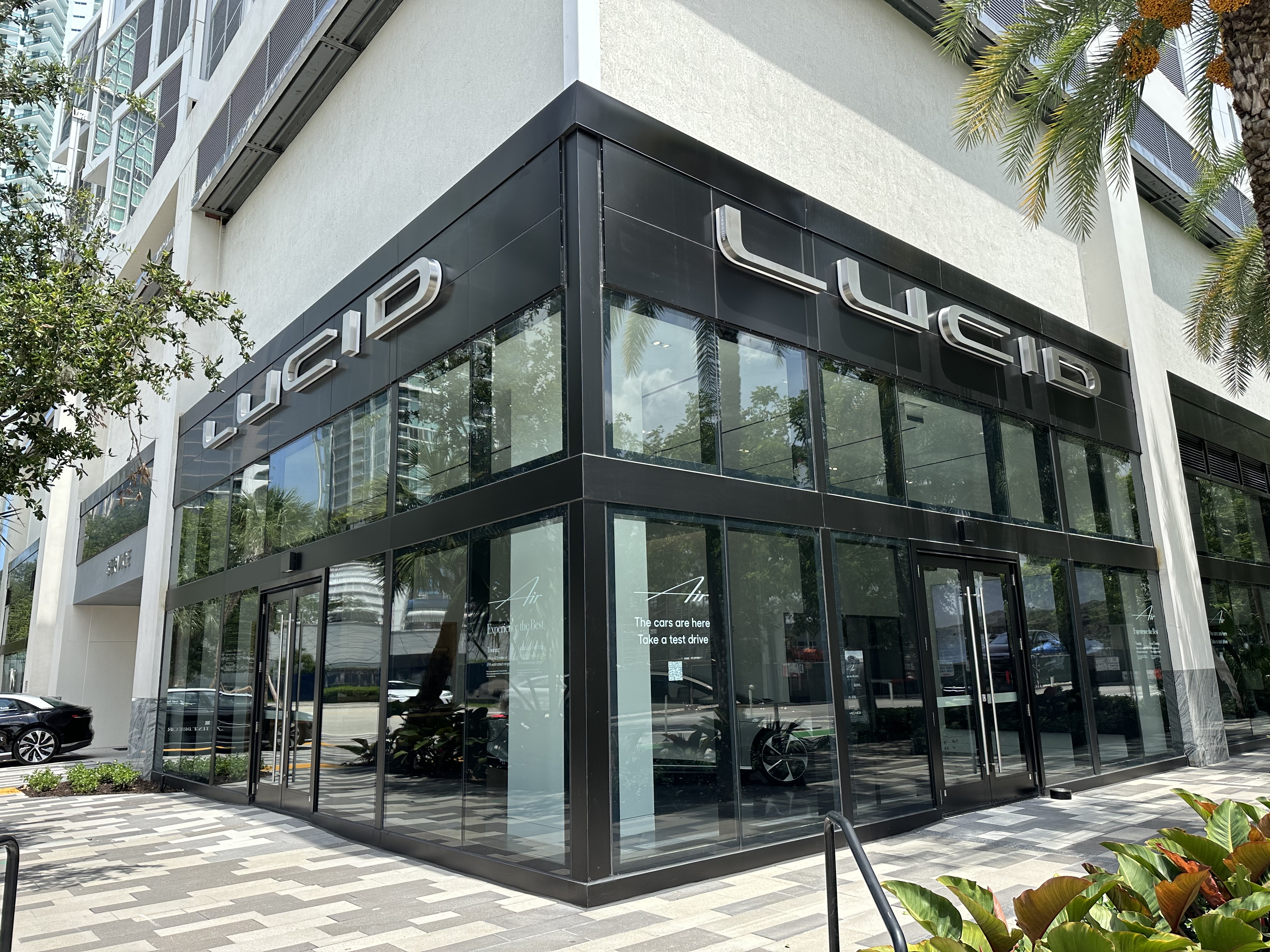
Lucid is focused on scaling production of both the Lucid Air sedan and the newly launched Lucid Gravity SUV. The company has been navigating the complexities of EV manufacturing ramp-ups, including supply chain challenges and production rate adjustments. The Aston Martin deal, which involves Lucid supplying electric powertrains and battery technology, is a significant development, aiming to generate new revenue streams and showcase Lucid's technological capabilities. Lucid also continues to expand its retail footprint with 'Lucid Studios' in key markets, aiming to provide a premium customer experience that mirrors the luxury positioning of its vehicles. The company's ability to meet ambitious production targets for the Gravity SUV will be a critical indicator of its future success.
🤔 Controversies & Debates
Lucid Motors faces considerable scrutiny regarding its production ramp-up. Critics point to the company's history of missing production targets and its substantial cash burn rate, raising questions about its long-term viability without continued significant investment. The reliance on the PIF for funding also invites debate about potential geopolitical influences and the sustainability of such a capital-intensive venture. Furthermore, the high price point of Lucid vehicles places them in a niche luxury market, leading to discussions about their accessibility and broader impact on EV adoption compared to more mass-market offerings from companies like Tesla. The company's ability to compete with established luxury automakers and newer EV entrants remains a central point of contention.
🔮 Future Outlook & Predictions
The future for Lucid hinges on its ability to successfully scale production, achieve profitability, and expand its product portfolio. Analysts predict that the company's success will depend on its execution of the Gravity SUV launch and its ability to secure further investment or achieve operational efficiencies. The partnership with Aston Martin could prove pivotal, potentially leading to further collaborations and licensing agreements that diversify Lucid's revenue streams beyond direct vehicle sales. There is also speculation about Lucid potentially developing more affordable EV models in the longer term, though current focus remains on the high-end luxury segment. The company's long-term trajectory will likely be shaped by global EV market trends and its capacity to innovate in battery technology and software.
💡 Practical Applications
Lucid's primary practical application is the manufacturing and sale of its luxury electric vehicles, the Lucid Air sedan and the Lucid Gravity SUV. Beyond direct sales, Lucid's core technology, particularly its advanced electric powertrains and battery management systems, is being supplied to other automakers. The agreement with Aston Martin is a prime example, where Lucid will provide its next-generation EV technology, including motors, inverters, and battery systems, for Aston Martin's future vehicles. This B2B (business-to-business) segment represents a significant opportunity for Lucid to monetize its R&D investments and establish itself as a key technology supplier in the rapidly evolving automotive industry.
Key Facts
- Category
- technology
- Type
- organization