
Contents
- 🎵 Origins & History
- ⚙️ How It Works
- 📊 Key Facts & Numbers
- 👥 Key People & Organizations
- 🌍 Cultural Impact & Influence
- ⚡ Current State & Latest Developments
- 🤔 Controversies & Debates
- 🔮 Future Outlook & Predictions
- 💡 Practical Applications
- 📚 Related Topics & Deeper Reading
- Frequently Asked Questions
- References
- Related Topics
Overview
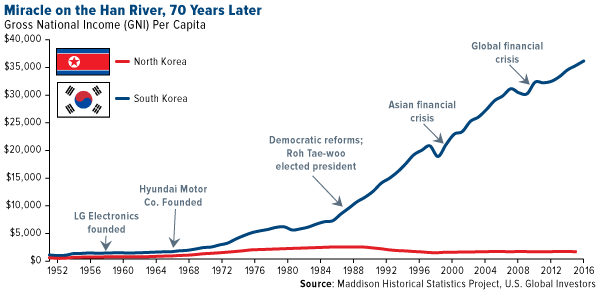
The Miracle on the Han River (Korean: 한강의 기적) denotes the astonishing period of hyper-growth that propelled South Korea from the ashes of the Korean War into a leading global economy. Spanning roughly from the 1960s through the late 20th century, this transformation saw the nation evolve from an agrarian, war-torn landscape into a high-tech industrial and cultural hub. This economic metamorphosis was driven by a potent combination of state-led industrial policy, a fiercely dedicated workforce, and the strategic expansion of powerful family-controlled conglomerates known as chaebols. Key milestones like hosting the 1988 Seoul Olympics and co-hosting the 2002 FIFA World Cup underscored this newfound global stature, while dramatic improvements in public health, such as declining child mortality and increased life expectancy, became hallmarks of this era. The period is often characterized by its state-driven capitalist model, meticulously managed under conservative governments like the Democratic Republican Party.
🎵 Origins & History
The genesis of the Miracle on the Han River can be traced to the immediate aftermath of the Korean War (1950-1953), which left South Korea in ruins, heavily reliant on foreign aid. Prior to this, Korea had endured decades of Japanese colonial rule and the subsequent division of the peninsula. The critical turning point began in the early 1960s under President Park Chung-hee's military government, which initiated ambitious, state-led economic development plans. These plans, heavily influenced by Japan's post-war economic model, prioritized export-oriented industrialization, focusing on light industries like textiles and footwear before strategically shifting towards heavy industries and electronics. The Economic Planning Board was established in 1961 to orchestrate these national development strategies, laying the groundwork for sustained, rapid growth that would redefine the nation's trajectory.
⚙️ How It Works
The engine of the Miracle on the Han River was a deliberate, top-down economic strategy. The government actively selected strategic industries and nurtured their growth through preferential loans, tax incentives, and protectionist policies. This state intervention fostered the rise of chaebols—large, diversified industrial conglomerates like Samsung, LG, and Hyundai—which became the primary vehicles for export expansion and technological advancement. The government also invested heavily in education and infrastructure, creating a skilled workforce and efficient logistics networks essential for manufacturing and trade. Labor policies, while often restrictive, channeled the nation's energy into productive sectors, prioritizing economic output above all else.
📊 Key Facts & Numbers
South Korea's economic transformation is quantifiable by staggering statistics. Between 1960 and 1990, its Gross Domestic Product (GDP) per capita grew by an average of 7% annually, a rate rarely seen in global economic history. By 1996, South Korea had joined the OECD, a club of developed nations, a stark contrast to its status as one of the world's poorest countries in the early 1960s. Exports surged from just $50 million in 1960 to over $100 billion by the early 1990s. Life expectancy increased from around 53 years in 1950 to over 70 years by the late 1980s, while infant mortality rates plummeted from over 100 per 1,000 live births in the 1950s to below 20 by the late 1980s.
👥 Key People & Organizations
Several key figures and organizations were instrumental in orchestrating this economic miracle. President Park Chung-hee, who ruled from 1961 to 1979, is arguably the most significant architect, implementing the foundational export-oriented industrialization policies. His administration's Economic Planning Board was the central planning agency. The leaders of the burgeoning chaebols, such as Lee Byung-chul (Samsung founder) and Chung Ju-yung (Hyundai founder), played crucial roles in executing the industrial expansion. The Bank of Korea managed monetary policy, and the Ministry of Trade, Industry and Energy (and its predecessors) guided industrial policy.
🌍 Cultural Impact & Influence
The Miracle on the Han River didn't just reshape South Korea's economy; it profoundly altered its cultural identity and global standing. The nation's successful transition to a developed economy became a powerful symbol of post-colonial success and a model for other developing nations. Hosting major international events like the 1988 Seoul Olympics and the 2002 FIFA World Cup showcased a modern, dynamic South Korea to the world, boosting national pride and tourism. This economic prowess also laid the foundation for the global rise of Hallyu (the Korean Wave), encompassing K-pop, K-dramas, and Korean cinema, demonstrating a cultural influence that now rivals its economic might.
⚡ Current State & Latest Developments
While the initial period of hyper-growth has subsided, the legacy of the Miracle on the Han River continues to shape South Korea. The nation remains a global leader in technology, particularly in semiconductors, smartphones, and automotive manufacturing, with companies like Samsung Electronics and SK Hynix dominating global markets. The focus has increasingly shifted towards innovation, research and development, and high-value services. South Korea is now navigating the challenges of an aging population, intense global competition, and the need for sustainable, inclusive growth, building upon the robust economic framework established during its miraculous decades of expansion.
🤔 Controversies & Debates
The Miracle on the Han River is not without its critics and controversies. The rapid industrialization often came at a significant human cost, with reports of poor working conditions, long hours, and suppression of labor rights during the authoritarian regimes that oversaw much of this growth. The concentration of economic power within a few chaebols has led to concerns about monopolistic practices, market distortions, and undue political influence. Furthermore, the environmental impact of rapid industrialization, including pollution and resource depletion, has become a growing concern in recent decades. Debates persist regarding the sustainability of the export-driven model and the equitable distribution of wealth generated during this period.
🔮 Future Outlook & Predictions
Looking ahead, South Korea's economic trajectory will likely be defined by its ability to adapt to new global paradigms. The nation is heavily investing in future-oriented industries such as artificial intelligence, biotechnology, and renewable energy. The ongoing Fourth Industrial Revolution presents both opportunities and challenges, requiring continuous innovation and workforce retraining. Experts predict a continued focus on high-tech exports and a growing emphasis on domestic consumption and services. The government's commitment to becoming a global leader in green technologies and digital transformation suggests a future where economic strength is intertwined with sustainability and technological advancement.
💡 Practical Applications
The principles and outcomes of the Miracle on the Han River have found practical applications and inspired numerous development strategies worldwide. The model of state-led industrial policy, focusing on export promotion and nurturing strategic industries, has been studied and emulated by countries seeking rapid economic development, particularly in Asia and Africa. The success of chaebols as engines of growth has influenced corporate structures and industrial organization in various economies. Furthermore, South Korea's advancements in education and human capital development serve as a blueprint for nations aiming to build a skilled workforce capable of competing in the global knowledge economy.
Key Facts
- Year
- 1960s-1990s
- Origin
- South Korea
- Category
- history
- Type
- phenomenon
Frequently Asked Questions
What exactly was the 'Miracle on the Han River'?
The 'Miracle on the Han River' is the term used to describe South Korea's extraordinary economic transformation from a war-torn, underdeveloped nation into a global economic powerhouse. This period of rapid growth, primarily from the 1960s to the 1990s, saw the country achieve unprecedented levels of industrialization, technological advancement, and improved living standards, fundamentally reshaping its place in the world.
What were the main drivers of this economic miracle?
Several factors fueled the miracle: a strong, state-led industrial policy that prioritized exports and nurtured key industries; the strategic development of large conglomerates known as chaebols like Samsung and Hyundai; a highly educated and diligent workforce; significant investments in infrastructure and education; and favorable international economic conditions, including foreign aid and access to global markets. The authoritarian governments of the era also played a crucial role in directing economic policy and suppressing labor unrest to maximize productivity.
How did South Korea's economy change during this period?
South Korea's economy underwent a dramatic structural shift. It transitioned from an agrarian base to a manufacturing-heavy economy, excelling in sectors like textiles, shipbuilding, automobiles, and later, electronics. Exports surged from under $100 million in the early 1960s to over $100 billion by the early 1990s. This growth also led to a significant increase in GDP per capita, a rise in life expectancy from around 53 years to over 70 years, and a sharp decline in infant mortality rates, reflecting widespread improvements in public health and living standards.
What is the significance of the Han River in this context?
The Han River flows through Seoul, the capital city, and has historically been central to Korean life and development. The name 'Miracle on the Han River' is symbolic, representing the revitalization and prosperity that emerged along its banks and throughout the nation. It evokes an image of rebirth and progress, transforming a river that may have witnessed devastation during wartime into a symbol of a thriving, modern economy and a nation reborn.
Were there any downsides or controversies associated with this rapid growth?
Yes, the rapid growth came with significant downsides. Authoritarian regimes suppressed labor rights, leading to poor working conditions and low wages for many workers. The concentration of economic power in the hands of a few chaebols created concerns about monopolies and economic inequality. Environmental degradation due to rapid industrialization was also a major issue. Critics point to the human cost and the potential for corruption and cronyism inherent in the state-capitalist model.
How did hosting the Olympics and World Cup contribute to the 'Miracle' narrative?
Hosting major international events like the 1988 Seoul Olympics and the 2002 FIFA World Cup served as powerful validation of South Korea's economic success and global integration. These events showcased a modern, capable, and prosperous nation to the world, boosting national pride, attracting foreign investment, and solidifying the 'miracle' narrative. They were tangible symbols of the country's transformation from a recipient of aid to a respected global player.
What is the current economic status of South Korea, and how does it relate to the 'Miracle' era?
Today, South Korea is a highly developed nation and a global leader in technology, manufacturing, and culture. While the era of hyper-growth has ended, the foundations laid during the 'Miracle' period—strong industrial base, technological prowess, and export orientation—continue to drive its economy. The nation now faces new challenges such as an aging population, intense global competition, and the need for innovation in emerging fields like AI and biotechnology, but it remains a testament to the transformative power of strategic development.