
Contents
Overview
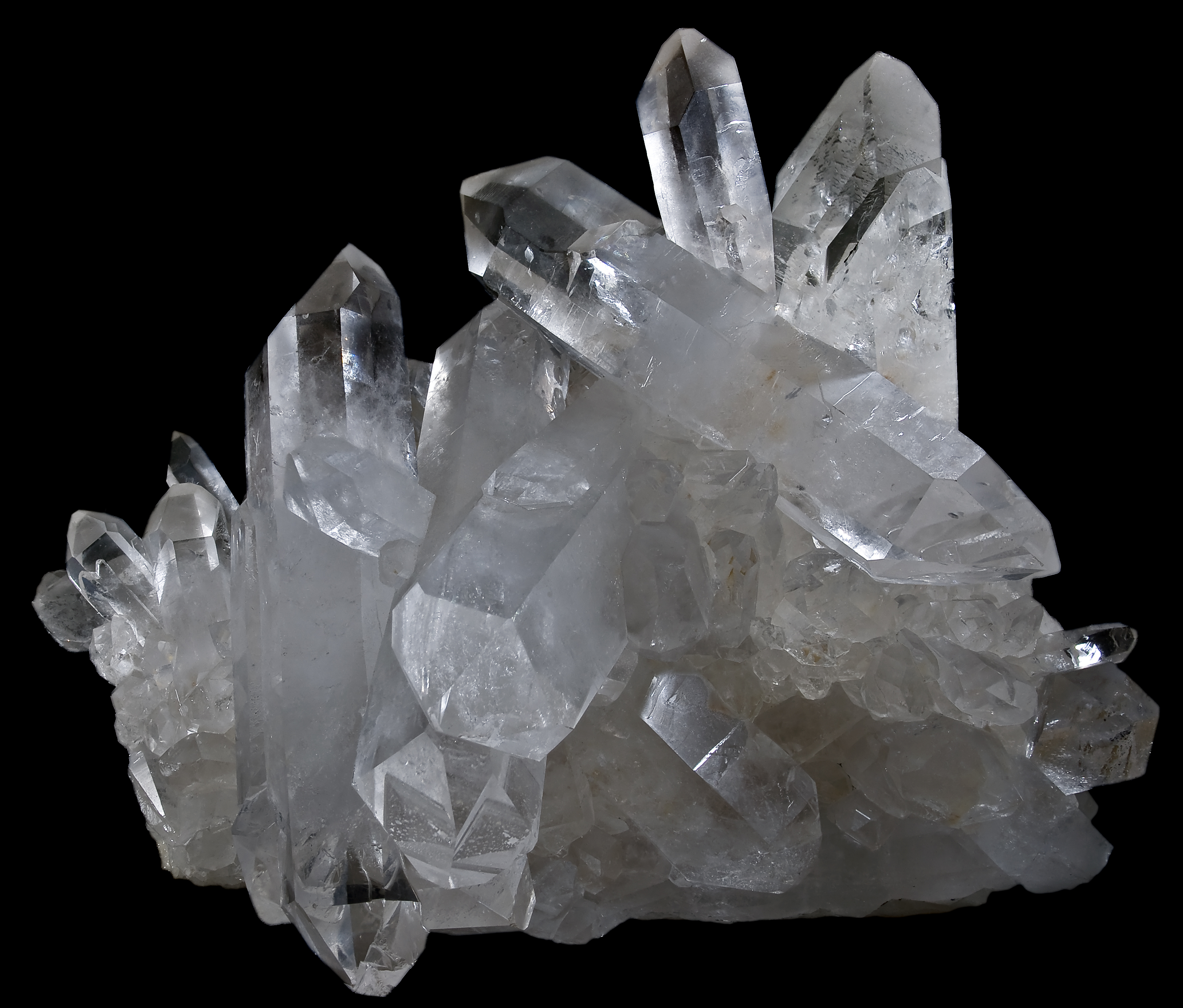
The story of quartz is as old as the Earth itself, with its formation deeply intertwined with the planet's geological evolution. As a primary component of igneous rocks like granite, it crystallizes from molten magma, a process that has occurred for billions of years. Ancient civilizations recognized quartz's durability and beauty, utilizing it for tools, weapons, and ornamentation. The ancient Greeks, for instance, believed quartz to be a form of solidified ice, deriving its name from the Greek word 'krystallos.' Early alchemists and later geologists meticulously documented its properties and occurrences, laying the groundwork for its scientific classification. The discovery of its piezoelectric properties, however, marked a pivotal moment, unlocking its technological potential far beyond its mineralogical significance.
⚙️ How It Works
At its core, quartz is silicon dioxide (SiO2), where silicon and oxygen atoms are arranged in a repeating tetrahedral structure. Each silicon atom is bonded to four oxygen atoms, forming SiO4 tetrahedra, which then link together to create a three-dimensional framework. This robust crystalline lattice is responsible for quartz's exceptional hardness and its resistance to chemical weathering. The mineral exhibits polymorphism, existing primarily as alpha-quartz at lower temperatures and pressures, and transforming into beta-quartz above 573°C. This phase transition is critical; it's accompanied by a significant volume change that can fracture ceramics and rocks, a phenomenon observed in industrial processes and geological events. Furthermore, the asymmetry of its crystal structure gives rise to chirality, meaning quartz crystals can exist in left-handed and right-handed forms, a property crucial for its optical behavior and applications in precision timing.
📊 Key Facts & Numbers
Quartz is astonishingly abundant. Major producers include China, the United States, and India. Gemstone varieties like amethyst have historically been valued highly, with significant deposits found in Brazil and Uruguay yielding millions of dollars in revenue annually.
👥 Key People & Organizations
While quartz itself is a mineral, its study and application involve numerous key figures and organizations. The discovery of piezoelectricity by Pierre Curie and Jacques Curie in 1880 at the Sorbonne University revolutionized its technological relevance. In the modern era, companies like Corning Incorporated have been instrumental in developing high-purity quartz for fiber optics and specialized glass. The Gemological Institute of America (GIA) plays a crucial role in identifying and grading gemstone varieties of quartz. Research institutions worldwide, such as the United States Geological Survey (USGS), continuously monitor quartz reserves and market trends.
🌍 Cultural Impact & Influence
Quartz's influence permeates human culture and technology. Its use in ancient tools and weapons speaks to its fundamental role in early human development. The spiritual and symbolic significance of quartz varieties, particularly amethyst, has been recognized across cultures for millennia, often associated with healing and tranquility. In the modern era, the piezoelectric effect of quartz crystals became the bedrock of the electronics industry, enabling the development of accurate timekeeping devices like quartz watches and frequency standards essential for radio and telecommunications. Its transparency and durability have also made it a staple in optics, from lenses to laboratory equipment. The ubiquity of quartz in sand and rock has shaped landscapes and influenced construction practices globally, from the beaches of Rio de Janeiro to the ancient pyramids of Egypt.
⚡ Current State & Latest Developments
The current landscape for quartz is dynamic, driven by demand in high-tech sectors and the construction industry. The semiconductor industry's insatiable need for ultra-high-purity quartz for crucibles used in silicon wafer production continues to be a major driver, with companies like SUMCO Corporation and Shin-Etsu Chemical investing heavily in production capacity. Engineered quartz surfaces have seen a surge in popularity in residential and commercial design, challenging traditional materials like granite and marble, with brands like Caesarstone and Cambria dominating this market. Geopolitical factors and supply chain vulnerabilities, particularly concerning high-purity quartz, are increasingly scrutinized, prompting efforts to diversify sourcing and enhance domestic production capabilities in regions like the United States and Europe. Innovations in synthetic quartz production are also gaining traction, aiming to meet stringent purity requirements more efficiently.
🤔 Controversies & Debates
The primary controversy surrounding quartz often centers on the environmental and labor practices associated with its extraction and processing, particularly for engineered stone products. Concerns have been raised about silica dust exposure during the manufacturing of quartz countertops, leading to a rise in silicosis cases among workers, prompting stricter regulations and safety protocols in countries like Australia and the United States. Furthermore, the sourcing of raw quartz, especially for high-purity applications, can involve complex international supply chains where ethical sourcing and labor conditions are not always transparent. Debates also arise regarding the classification and grading of gemstone varieties, with synthetic quartz and treatments sometimes used to enhance appearance, leading to discussions about authenticity and value within the gemological community.
🔮 Future Outlook & Predictions
The future of quartz appears intrinsically linked to advancements in technology and sustainable practices. The demand for high-purity quartz is projected to grow significantly, fueled by the expansion of the semiconductor industry, the development of 5G networks, and the increasing use of LED lighting which requires quartz components. Research into novel applications, such as advanced piezoelectric materials for energy harvesting and improved sensors, is ongoing. Efforts to develop more sustainable mining and processing techniques, including enhanced recycling of quartz-based materials and the reduction of silica dust hazards, will be crucial. The potential for breakthroughs in synthetic quartz production could also reshape the market, offering greater control over purity and potentially reducing reliance on natural reserves. The ongoing exploration of new piezoelectric and optical properties may unlock entirely new technological frontiers for this ancient mineral.
💡 Practical Applications
Quartz's practical applications are vast and varied. Its most famous use is in quartz watches and clocks, where the precise oscillation of a quartz crystal at a specific frequency (typically 32,768 Hz) provides highly accurate timekeeping. In electronics, it's used in oscillators for radios, computers, and other digital devices to generate stable clock signals. High-purity quartz is indispensable for manufacturing silicon wafers, the foundation of integrated circuits and microprocessors, as well as for crucibles used in growing silicon crystals. Its optical properties make it ideal for lenses, prisms, and windows in scientific instruments, telescopes, and fiber optic cables. In c
Key Facts
- Category
- nature
- Type
- topic