Contents
- ⚡ What Exactly IS a Generator?
- 💡 Types of Generators: Beyond the Basics
- ⚙️ How Generators Work: The Core Principles
- 🌍 Generators in the Wild: Real-World Applications
- 📈 The Generator Market: Who's Leading the Charge?
- 🤔 The Generator Debate: Reliability vs. Sustainability
- 🚀 The Future of Power Generation: What's Next?
- 🛠️ Choosing the Right Generator for Your Needs
- Frequently Asked Questions
- Related Topics
Overview
Generators are the unsung heroes of modern life, providing essential power when the grid fails or in locations where it's absent. They convert mechanical energy into electrical energy, typically through an engine driving an alternator. While commonly associated with emergency preparedness during blackouts, generators are also crucial for construction sites, remote cabins, and even large-scale events. The market ranges from portable gasoline units for tailgating to robust diesel behemoths powering entire facilities. Understanding fuel types, wattage requirements, and maintenance is key to selecting and operating the right generator for your needs.
⚡ What Exactly IS a Generator?
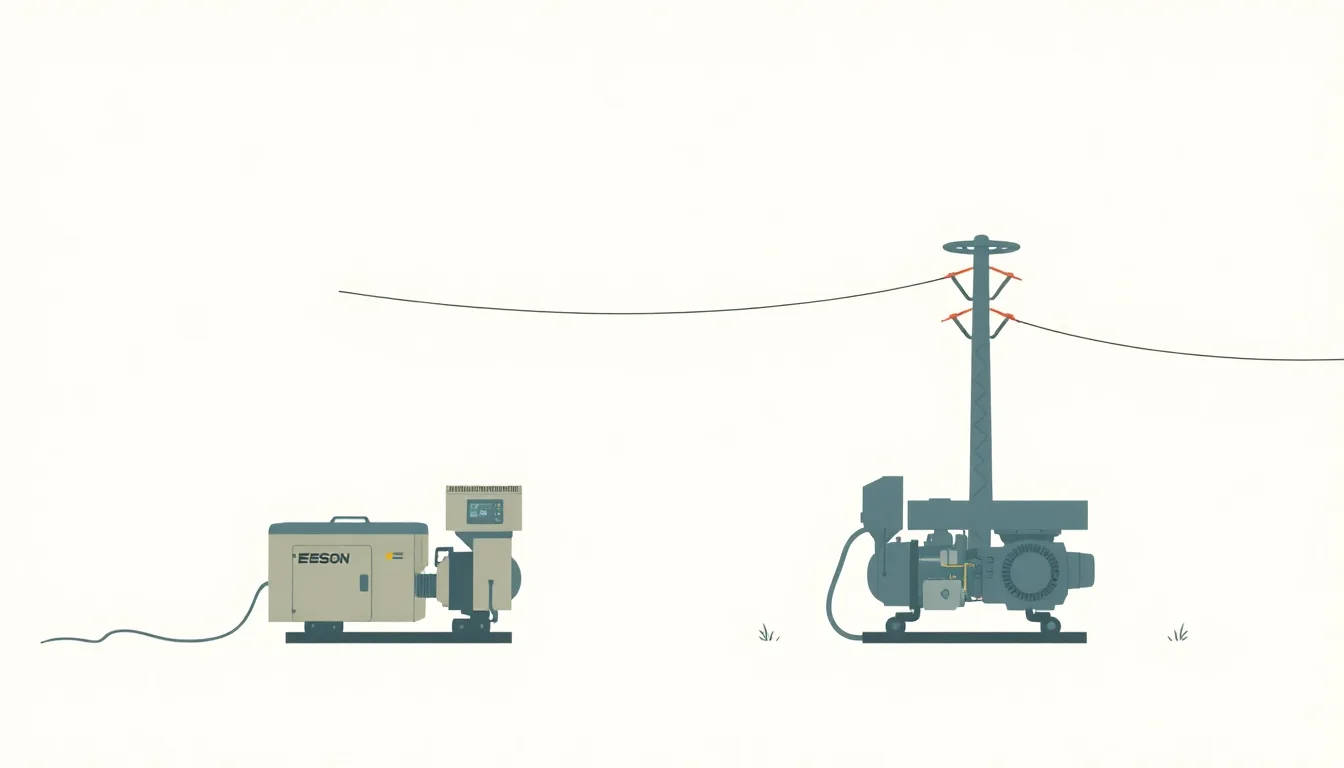
At its most fundamental, a generator is a device designed to produce something. In the context of power, we're primarily talking about electric generator, machines that convert mechanical energy into electrical energy. Think of it as the inverse of an electric motor. These aren't just for emergency backup; they form the backbone of our modern electrical grids, ensuring power flows even when the primary sources falter. Understanding the basic electromagnetic induction principle is key to grasping their function, a concept first explored by Michael Faraday in the 1830s.
💡 Types of Generators: Beyond the Basics
The term 'generator' is broader than just the common portable units you see at a construction site. We have signal generator crucial for electronics testing, tidal stream generator harnessing ocean power, and even hypothetical wearable generator concepts. Then there are engine-generator which combine an engine with an alternator for self-contained power, and atmospheric water generator that pull potable water from the air. Each serves a distinct purpose, from scientific instrumentation to essential resource creation.
⚙️ How Generators Work: The Core Principles
The magic behind an electric generator lies in Faraday's law of electromagnetic induction. Essentially, moving a conductor through a magnetic field, or moving a magnetic field past a conductor, induces an electric current. This mechanical motion is typically provided by a prime mover – be it a combustion engine, a turbine powered by steam or water, or even wind. The faster the movement or stronger the magnetic field, the more electricity is produced. This elegant physical principle has powered industries for over a century.
🌍 Generators in the Wild: Real-World Applications
Generators are the unsung heroes of countless scenarios. They keep hospitals running during power outages, provide electricity for remote communities lacking grid access, and power everything from data centers to temporary event venues. engine-generator are ubiquitous on construction sites and for disaster relief. tidal stream generator are emerging as a clean energy source in coastal regions, while gas generator are vital for industrial processes requiring controlled gas production.
📈 The Generator Market: Who's Leading the Charge?
The global generator market is a multi-billion dollar industry, dominated by major players like Caterpillar, Cummins, and Generac. Demand is driven by industrial growth, increasing infrastructure development in emerging economies, and the persistent need for reliable backup power. While portable generators represent a significant segment, the market for larger industrial and standby units is substantial, reflecting the critical role these machines play in maintaining operational continuity across sectors.
🤔 The Generator Debate: Reliability vs. Sustainability
A persistent tension exists between the reliability electric generator offer and the environmental impact of their operation, particularly fossil fuel generators. While essential for grid stability and emergency power, their emissions contribute to air pollution and climate change. This fuels the debate around transitioning to cleaner alternatives, such as renewable energy sources and advanced battery storage, while acknowledging the current limitations of these technologies in providing consistent, on-demand power.
🚀 The Future of Power Generation: What's Next?
The future of power generation is a complex interplay of decentralization, digitalization, and decarbonization. We're seeing advancements in hydrogen fuel cells, more efficient battery storage systems, and smart grid technologies that can better integrate intermittent renewable energy sources. The role of traditional engine-generator may evolve, perhaps shifting towards cleaner fuels or becoming more integrated with renewable systems for peak shaving and grid balancing.
🛠️ Choosing the Right Generator for Your Needs
Selecting the right generator depends entirely on your needs. For home backup, a portable unit or a standby engine-generator might suffice, rated in kilowatts (kW). Industrial applications require larger, more robust systems. Consider fuel type (gasoline, diesel, propane, natural gas), noise levels, portability, and whether you need a simple power source or a more sophisticated motor-generator setup. Always consult with a qualified electrician to ensure proper sizing and installation.
Key Facts
- Year
- 1831
- Origin
- Michael Faraday's discovery of electromagnetic induction
- Category
- Technology & Infrastructure
- Type
- Technology
Frequently Asked Questions
What's the difference between a generator and a power bank?
A power bank is essentially a portable battery storage system that stores electrical energy. A electric generator, on the other hand, produces electricity by converting mechanical energy. You recharge a power bank from an electrical source, while a generator creates its own power, typically by burning fuel or using mechanical motion.
Are generators safe to use indoors?
Absolutely not. Most engine-generator produce deadly carbon monoxide fumes. They should always be operated outdoors, far away from windows, doors, and vents to prevent dangerous gas buildup. Never run a generator inside a home, garage, or basement, even with ventilation.
How much power do I need from a generator?
This depends on what you want to power. For basic needs like refrigeration and lights during a power outage, a smaller portable unit (3,000-5,000 watts) might work. For larger appliances or whole-house backup, you'll need a much larger standby unit, often 10,000 watts or more. Calculate the wattage of all devices you intend to run simultaneously.
What fuel types are available for generators?
Common fuel types include gasoline, diesel, propane, and natural gas. Gasoline generators are often portable and less expensive but have shorter run times and require more frequent refueling. Diesel generators are more durable and fuel-efficient for heavy-duty use. Propane and natural gas generators offer cleaner emissions and longer storage life for fuel but may have slightly lower power output.
Can generators be connected directly to my home's electrical panel?
Yes, but only if installed by a licensed electrician with a proper transfer switch. A transfer switch safely disconnects your home from the utility grid before the generator powers it, preventing dangerous backfeeding that could harm utility workers or damage your generator and home appliances. Never plug a generator directly into a wall outlet.